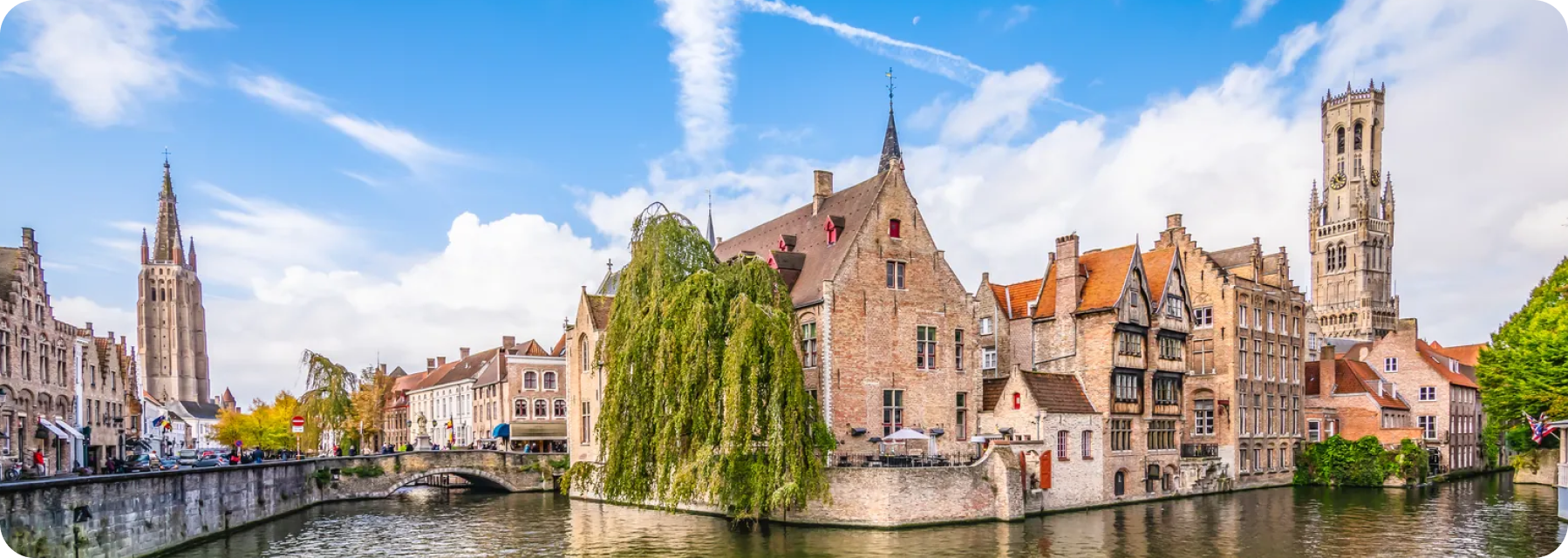

Belgium is increasingly on the radar of international students for its excellent teaching quality, research-led curricula, seasoned professors, and robust student services. You’ll find English-medium programs, well-equipped campuses, and a multilingual, cosmopolitan atmosphere that helps newcomers settle fast and graduate with credentials employers respect plus strong pathways into EU institutions, logistics, engineering, and biotech.
Belgium is a small but influential country located in Western Europe, often described as the “heart of Europe” due to its central position and the fact that Brussels hosts the headquarters of the European Union and NATO. Despite its modest size, Belgium plays a significant role in international politics, culture, and education, making it an appealing destination for students and travelers alike.
Covering an area of about 30,500 square kilometers, Belgium shares borders with France, Germany, Luxembourg, and the Netherlands, providing easy access to many parts of Europe. Its geography ranges from the sandy North Sea coastline and flat lowlands in Flanders to rolling hills in Wallonia and the forested Ardennes region in the south. This variety makes Belgium both scenic and convenient for exploring Europe.
Belgium is a multilingual country with three official languages: Dutch, French, and German. This cultural and linguistic diversity is reflected in its traditions, literature, and day-to-day life, creating a unique blend of Northern and Southern European influences. In Belgium, international students benefit greatly from the widespread use of English, particularly within universities, research institutions, and urban centers such as Brussels, Antwerp, and Ghent. Many degree programs, especially at the graduate level, are offered entirely in English, allowing students from diverse backgrounds to pursue their studies without language barriers.
Beyond academics, English is commonly spoken in daily life in larger cities, in restaurants, shops, and public transport, making it easier for newcomers to navigate, socialize, and access essential services. Universities often provide additional language support, such as English-language orientation programs, workshops, and student clubs, helping international students integrate smoothly into both the academic and local community.
The capital, Brussels, is a vibrant cosmopolitan hub known for its mix of historic charm and modern internationalism. Cities like Antwerp, Ghent, Bruges, and Leuven are equally famous for their cultural heritage, medieval architecture, and dynamic student communities.
Belgium uses the Euro (€ / EUR) as its official currency, which is shared with most countries in the Eurozone. Banknotes are available in denominations of €5, €10, €20, €50, €100, €200, and €500, while coins range from 1 cent to €2.
For international students, handling money in Belgium is straightforward. ATMs are widely available in cities, towns, and near universities, and most accept international cards such as Visa and Mastercard. Contactless payments and mobile wallets are increasingly common in shops, restaurants, and public transport, making transactions quick and convenient.
Belgium also offers a rich cultural life. From world-class museums and art galleries to music festivals and traditional carnivals, there’s always something happening. The country is famous for its culinary delights as well — Belgian chocolate, waffles, and fries have earned global recognition, while the country’s brewing traditions make it home to some of the world’s best beers.

Belgium’s educational system is one of the most respected in Europe, known for its high academic standards, multilingual approach, and accessibility to both local and international students. The system is unique because it reflects the country’s linguistic and cultural diversity, with education organized under three main communities: the Flemish (Dutch-speaking), the French-speaking, and the German-speaking communities. Each community manages its own schools, universities, and policies, ensuring education is adapted to linguistic and cultural needs.
Compulsory education in Belgium runs from ages 6 to 18, though many children begin preschool as early as 2.5 years old. Primary education lasts six years, followed by six years of secondary education, where students choose academic, technical, artistic, or vocational tracks depending on their career interests. This early flexibility allows students to pursue paths suited to their strengths and ambitions.
Higher education in Belgium is highly regarded and attracts students from across the world. Universities and university colleges offer bachelor’s, master’s, and doctoral degrees, with programs available in Dutch, French, German, and increasingly in English to accommodate international students. Belgian universities are known for their strong emphasis on research, innovation, and critical thinking, often ranking among the best in Europe.
Tuition fees in Belgium are relatively affordable compared to many Western European countries, making it a popular study destination. International students exchange opportunities, particularly through the Erasmus+ program and partnerships with institutions across Europe and beyond.
Belgium’s education system combines tradition with modernity, ensuring students receive a comprehensive academic foundation while also engaging with cutting-edge developments in science, technology, and the arts. With its strong global connections and multicultural learning environment, Belgium offers a truly enriching academic experience for students worldwide.
Belgium is home to a wide range of universities and applied sciences institutions that combine academic excellence with practical training. Known for their multilingual programs, strong international ties, and focus on innovation, Belgian universities attract students from across Europe and beyond. Here are some of the top institutions:
UBI Business School – a modern institution focused on providing practical, career-oriented business education. It emphasizes entrepreneurship, management, and international business, combining innovative teaching methods with real-world projects and industry connections. Students benefit from a global perspective, networking opportunities, and programs designed to prepare them for competitive careers in the business world.
UC Leuven-Limburg (UCLL) – renowned for its applied sciences and professional bachelor programs, UCLL provides hands-on learning in business, health, teacher training, and technology. Its close links with industry ensure students gain real-world experience and employability.
Karel de Grote University of Applied Sciences and Arts (KDG) – based in Antwerp, KDG offers a wide range of programs in business, IT, media, education, healthcare, and social work. Known for its international outlook, the university has partnerships worldwide and offers many English-taught courses.
KU Leuven – consistently ranked as one of Europe’s top research universities, KU Leuven is a global leader in innovation, research, and higher education. Offering a wide selection of bachelor’s, master’s, and doctoral programs, many of which are taught in English, KU Leuven attracts thousands of international students each year.
Vrije Universiteit Brussel (VUB) – located in the heart of Belgium’s capital, VUB is a dynamic research university offering high-quality education in sciences, engineering, social sciences, humanities, and medicine. With its international environment and multicultural campus, it is a hub for global collaboration and student diversity.
Belgium’s universities provide not only a strong academic foundation but also a culturally rich student experience. With opportunities to study in English, Dutch, French and German international students can immerse themselves in a multilingual environment while gaining access to top-quality education and global career pathways.

Student life in Belgium is a perfect balance of academic dedication and vibrant cultural experiences. With its central location in Europe, Belgium offers students the chance to not only study in a multicultural environment but also explore neighboring countries with ease. International students are welcomed warmly, and the country’s multilingual character ensures that adapting to life here is smooth and enriching.
Belgian cities such as Brussels, Leuven, Antwerp, and Ghent are bustling student hubs, filled with historic charm, modern amenities, and lively social scenes. Campus life is enhanced by student organizations, cultural associations, and events that encourage networking, cultural exchange, and friendships across borders. Whether it’s attending lectures in world-class universities or joining student clubs, there’s always something to keep learners engaged.
Belgium is also known for its café culture and culinary delights. Students can enjoy affordable meals on campus or savor local favorites like waffles, fries, and rich Belgian chocolate after class. Socializing often revolves around music festivals, art exhibitions, and vibrant nightlife, while the country’s cycling routes, parks, and scenic towns provide opportunities for relaxation and exploration.
Affordable public transport and student discounts make it easy to navigate the country. From medieval castles to modern art museums, students are never short of opportunities to immerse themselves in Belgium’s rich cultural and historical heritage. With a safe environment and a thriving international community, Belgium provides an inspiring and supportive backdrop for academic and personal growth.

Belgium is generally considered a safe and welcoming country for both locals and international students. Crime rates are relatively low, especially in smaller towns and university cities, and the local authorities prioritize public safety. The country maintains a well-organized police force and strong emergency services, ensuring quick responses when needed. Healthcare services are also of a high standard, providing reliable medical care for students and residents alike. Belgian cities are well-lit, and public transport is considered safe to use even in the evenings, making mobility convenient for students.
Belgium also has a reputation for being politically stable and socially tolerant, with its diverse population fostering a welcoming atmosphere for people from different backgrounds. For international students, it’s helpful to stay informed through university bulletins or local news about public events that might affect transport or daily routines.
Overall, Belgium offers a secure environment where students can focus on their studies, enjoy cultural activities, and experience life in a dynamic European setting without major safety concerns.

Belgium is a small yet diverse country located in Western Europe, bordered by France, the Netherlands, Germany, Luxembourg, and the North Sea. Despite its compact size, it features a variety of landscapes — from sandy coastal plains in the northwest to rolling hills and fertile valleys in the central region, and the picturesque Ardennes mountains in the southeast. This geographical diversity makes Belgium not only strategically important but also rich in natural beauty, offering both urban vibrancy and tranquil green spaces.
The country experiences a temperate maritime climate, heavily influenced by the North Sea and the Atlantic Ocean. Winters are generally mild, with average temperatures hovering around 0°C to 5°C, while summers are comfortably warm, ranging between 18°C and 25°C. Rainfall is evenly distributed throughout the year, giving Belgium its lush greenery, though sudden showers are common, so an umbrella is often a necessity. Snow is rare but possible in winter, especially in the Ardennes region, where colder conditions and higher elevations make it more frequent.
Seasonal changes bring distinct charm: spring and summer bloom with festivals, outdoor dining, and lively cultural events, while autumn dresses the countryside in warm golden hues. The Ardennes also offer opportunities for hiking and outdoor adventures, while the coastal areas attract visitors for their beaches and seaside towns.
Belgium’s central European location and moderate climate make it an attractive study destination, allowing international students to enjoy a balance of urban and natural experiences all year round.

Belgium’s cuisine is as delightful and diverse as its culture, often described as a blend of French finesse and German heartiness, with its own unique flair. Famous worldwide for its chocolates, waffles, and fries, Belgium has much more to offer than just its iconic treats.
Belgian waffles come in different regional varieties — the light, crispy Brussels waffle and the sweeter, denser Liège waffle being the most popular. Belgian chocolate, considered among the finest in the world, is a national treasure, with pralines and truffles crafted by legendary chocolatiers. And of course, Belgium takes great pride in its fries (frites), usually served with a variety of sauces, the most famous being mayonnaise.
Beyond its sweet and savory street food, Belgium is also home to hearty traditional dishes. Favorites include moules-frites (mussels with fries), stoofvlees (Flemish beef stew), waterzooi (a creamy chicken or fish stew), and carbonnade flamande, a slow-cooked beef dish simmered in beer. Beer itself holds a special place in Belgian cuisine — the country boasts hundreds of breweries and styles, from strong Trappist ales brewed by monks to fruity lambics and refreshing witbiers.
Seafood is abundant in coastal areas, while the Ardennes region is known for its cured meats and game dishes. Meals are often enjoyed with freshly baked bread, artisanal cheese, and, of course, a good drink.
For international students, Belgium offers not only traditional dining but also a cosmopolitan food scene in cities like Brussels and Antwerp, where global cuisines sit alongside Belgian specialties. Eating in Belgium is not just nourishment — it’s an experience that reflects the country’s warmth, history, and love for good company.
Belgium offers moderate tuition fees compared to many Western countries. General Medicine programs typically cost between €3,000 and €9,000 per year, depending on the institution and language of instruction. Other bachelor’s programs generally range from €2000 to €4,500 annually, while master’s degrees cost €2,000 to €6,000. EU/EEA students usually pay lower fees.




Fill in your details to process your application


