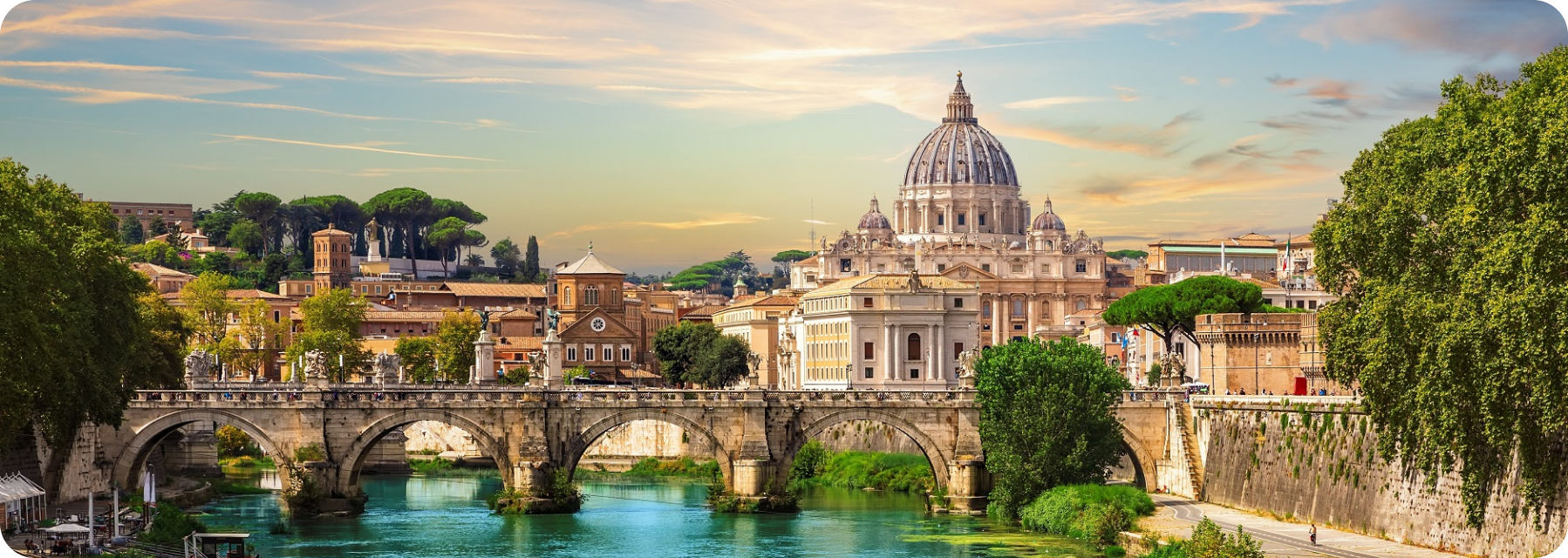

Italy is a standout study choice with renowned universities, a wide range of English-taught degrees, and student-centered support. Campuses are well resourced and welcoming, helping international students settle quickly. Graduates develop market-ready skills and connections in business & management, IT & computer science, engineering, economics, and communications/media—all while enjoying Italy’s rich culture, historic cities, Mediterranean landscapes, and a balanced cost of living.
Italy, located in Southern Europe, is a country celebrated worldwide for its history, culture, and influence on art, science, and education. Known as the birthplace of the Renaissance, Italy has been a hub of intellectual and cultural progress for centuries, with contributions that have shaped Western civilization.
Covering an area of about 301,000 square kilometers, Italy boasts a stunning mix of landscapes—from the snow-capped Alps in the north and rolling hills of Tuscany to the Mediterranean coastlines and picturesque islands like Sicily and Sardinia. Its geography makes it not only beautiful but also diverse in climate and lifestyle.
The capital city, Rome, is a living museum where ancient monuments like the Colosseum and the Roman Forum coexist with a bustling modern metropolis. Other cities such as Milan, Florence, Venice, and Naples each carry their own unique charm, blending historic architecture with modern innovation, making Italy one of the most dynamic countries in Europe.
Culturally, Italy is world-renowned for its art, fashion, music, cinema, and cuisine. From Leonardo da Vinci’s masterpieces to modern Italian design, the country represents creativity and sophistication at its finest. Italy is also the home of opera and classical music traditions that continue to resonate globally.
The official currency is the Euro (€), and international students will find financial transactions simple and convenient with wide availability of ATMs, banks, and digital payments. Italian society is known for its warmth and hospitality, making it easier for students from abroad to adapt and feel at home.
With its unique combination of history, modernity, and Mediterranean lifestyle, Italy stands as one of the most attractive destinations for international students seeking both academic excellence and a culturally enriching experience.

Italy is home to one of the oldest and most respected educational traditions in Europe, with universities that date back nearly a thousand years. The Italian higher education system combines academic excellence, cultural richness, and accessibility, making it a highly attractive destination for international students.
Higher education in Italy is primarily divided into public universities, private universities, and specialized institutions such as polytechnics and academies of fine arts. Public universities dominate the system and are widely recognized for their strong academic foundations, while private universities often offer more personalized learning environments.
The Italian higher education system follows the Bologna Process, ensuring compatibility with European and global education standards. Degrees are structured as follows:
Fields of study are diverse, ranging from medicine, engineering, and economics to art, architecture, and design—areas in which Italy has gained worldwide prestige. Programs in English are widely available, particularly in medicine, international relations, business, and the arts, attracting thousands of students from across the globe.
Italy is also a leader in research and innovation, with universities and institutes contributing significantly to global advancements in science, technology, and humanities. Many institutions collaborate with international organizations and industries, giving students opportunities for internships, research projects, and global career pathways.
Affordability is another key feature. Compared to many Western European countries, tuition fees in Italy are relatively low, especially in public universities. This combination of quality and affordability makes Italy one of the most sought-after destinations for higher education.
With a system rooted in tradition yet open to modern innovation, Italian universities continue to uphold their legacy of academic excellence while preparing students to thrive in an increasingly interconnected world.
Italy is home to some of the world’s oldest and most prestigious universities, many of which have shaped global education for centuries. Known for their strong academic traditions, innovative research, and welcoming environment for international students, Italian universities continue to attract learners from all corners of the globe. Among the most notable institutions are:
Together, these universities reflect Italy’s long-standing commitment to education, combining tradition with modern academic opportunities. They not only provide world-class programs but also allow students to immerse themselves in the rich cultural and historical heritage of Italy.

Student life in Italy is a unique blend of academic tradition, cultural richness, and vibrant social experiences. With universities spread across historic cities and picturesque towns, students not only gain world-class education but also live in environments filled with art, history, and lively modern life.
Italian campuses often serve as cultural hubs, hosting lectures, exhibitions, film screenings, and festivals that bring together both local and international students. From centuries-old libraries to modern study centers, students have access to academic resources that inspire both learning and discovery.
Outside the classroom, Italy offers endless opportunities for exploration. Cities like Rome, Florence, Milan, Bologna, and Turin are brimming with museums, galleries, theaters, and concert halls, allowing students to immerse themselves in art, music, and cultural traditions that shaped Western civilization. Cafés, piazzas, and vibrant student neighborhoods provide welcoming spaces to socialize, network, and experience authentic Italian life.
For those who enjoy outdoor activities, Italy’s geography is a playground—skiing in the Alps, hiking in the Dolomites, or relaxing along the Amalfi Coast and Mediterranean beaches. Weekend trips are easy, thanks to Italy’s excellent transport system and its central location in Europe, which allows students to travel to neighboring countries with ease.
Italian cuisine is also an integral part of student life. From affordable university cafeterias to traditional trattorias and lively markets, students enjoy some of the best food in the world—pizza, pasta, gelato, and regional specialties—making daily life both delicious and affordable.
International students quickly find that Italy’s warm hospitality, student associations, and Erasmus networks make integration smooth and rewarding. With a strong emphasis on community and culture, studying in Italy is not only an academic journey but also an unforgettable life experience.

Italy is a welcoming, student-friendly destination where day-to-day life feels smooth and well organized. Major cities like Rome, Florence, Milan, Bologna, and Turin offer reliable public services, excellent transport links, and vibrant neighborhoods that make it easy to settle in and get around.
Universities prioritize student well-being with clear support channels, orientation weeks, and international offices to help with healthcare, enrollment, and life on campus. Residence halls typically use secure access and provide on-site assistance, so newcomers feel comfortable from the start.
Getting around is straightforward—trains, buses, and metros connect cities and districts efficiently, while walkable centers, bike lanes, and shared mobility make short trips simple. With friendly communities, lively cafés, and a rich cultural scene, students can focus on their studies and enjoy everything Italy has to offer.

Italy is located in Southern Europe, stretching across the Mediterranean with its iconic boot-shaped peninsula and islands such as Sicily and Sardinia. Its diverse geography includes the Alps in the north, which form a natural border with Switzerland and Austria, the rolling hills of Tuscany, fertile plains in the Po Valley, and the beautiful coastlines along the Adriatic, Ionian, and Tyrrhenian Seas. This unique landscape makes Italy one of the most geographically varied countries in Europe.
The climate in Italy also varies significantly from region to region.
This variety in climate and geography gives students the chance to experience everything from skiing in the Alps to relaxing on Mediterranean beaches, all within one country. Italy’s diverse landscapes also play an important role in its cultural richness, agriculture, cuisine, and lifestyle, making it not only an academic destination but also a place full of natural beauty and exploration opportunities.

Italian cuisine is one of the most celebrated in the world, known for its simplicity, freshness, and regional variety. Each region of Italy has its own traditional dishes, shaped by local ingredients, climate, and history, making the culinary experience as diverse as the country’s geography.
Italian cuisine goes far beyond pizza and pasta—it’s about fresh ingredients, family traditions, and a passion for food. From espresso in the morning to gelato in the evening, meals are not just about eating but about enjoying life.
Italy offers competitive tuition for international students. Medicine programs typically cost €12,000–€20,000 per year. Other bachelor’s degrees generally range €3,000–€8,000 annually, while master’s programs are usually €3,500–€10,000, depending on the university and field of study.


Fill in your details to process your application


