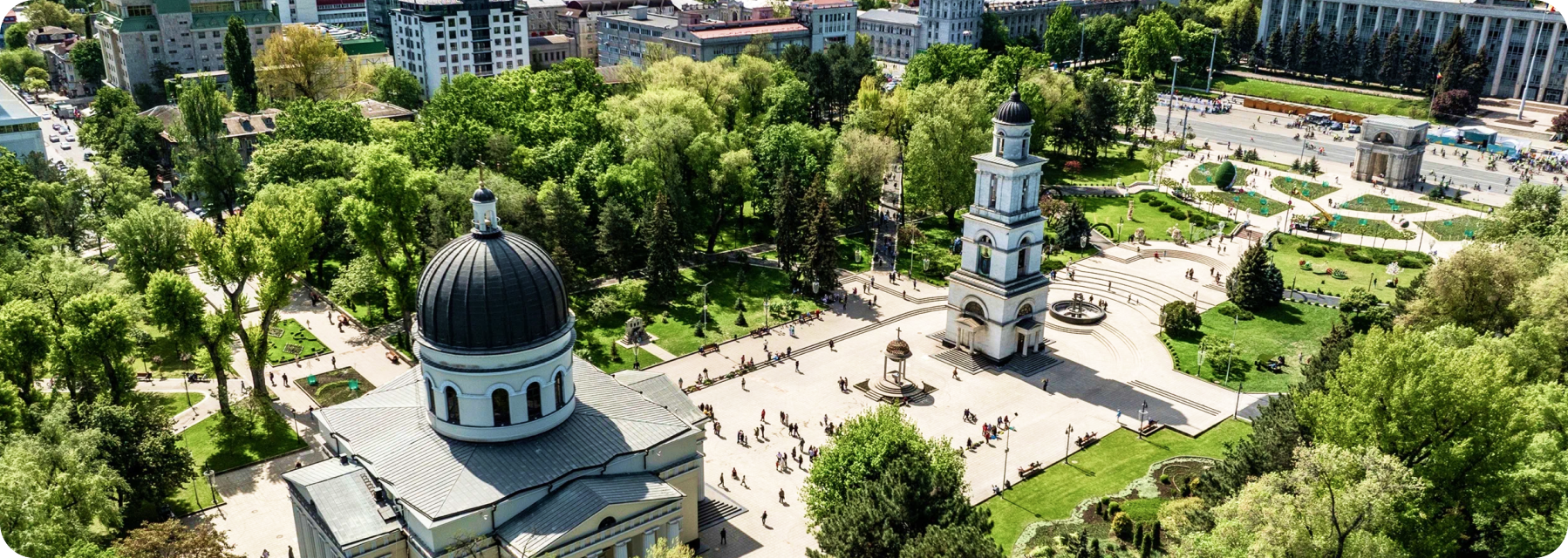

Moldova is an emerging study destination with established universities, a growing choice of English-taught programs, and student-first support. Campuses are welcoming and well equipped, helping newcomers settle quickly. Graduates build job-ready skills and connections in business & management, IT, and engineering, all amid Moldova’s rich cultural heritage, green parks and vineyards, and a budget-friendly cost of living centered around vibrant Chișinău.
Moldova, a landlocked country in Eastern Europe, is known for its rich cultural heritage, welcoming people, and rapidly developing educational opportunities. Bordered by Romania to the west and Ukraine to the north, east, and south, Moldova offers a unique blend of European and Eastern traditions, making it an attractive destination for international students and travelers alike.
The capital city, Chișinău, is the largest and most vibrant urban center, serving as the political, cultural, and economic heart of the country. Known for its leafy parks, Soviet-era architecture, and growing modern infrastructure, Chișinău is a dynamic hub where students can enjoy both traditional Moldovan hospitality and a modern lifestyle.
Moldova is celebrated for its picturesque landscapes, which include rolling hills, fertile plains, vineyards, and historical monasteries. Often referred to as one of Europe’s best-kept secrets, the country is also famous for its winemaking traditions, with vineyards producing some of the oldest and finest wines in the region.
The official language of Moldova is Romanian (often referred to locally as Moldovan), while Russian, Gagauz, and Ukrainian are also widely spoken in various communities. English is increasingly used, especially among younger generations and within academic settings, making it easier for international students to adapt.
The national currency is the Moldovan Leu (MDL), and the cost of living is relatively affordable compared to many European countries. This affordability, combined with a growing number of universities offering internationally recognized programs, makes Moldova an appealing study destination.
Moldova’s charm lies not only in its academic opportunities but also in its warm and friendly environment. International students often appreciate the safe atmosphere, cultural richness, and the opportunity to explore a country where tradition and modernity exist side by side.

Moldova’s educational system is structured to provide both strong academic foundations and practical skills, aligning with European standards. The system is divided into several levels: primary, secondary, vocational, and higher education. Compulsory education lasts for 9 years, covering primary and lower secondary schooling, ensuring that all students receive essential knowledge and competencies.
Higher education in Moldova follows the Bologna Process, making degrees internationally recognized and comparable with European qualifications. Universities typically offer three main cycles:
Instruction is primarily in Romanian, but many universities provide programs in English, Russian and French, particularly in fields like medicine, engineering, and international relations. This makes Moldova accessible to international students from different linguistic backgrounds.
The country has a mix of public and private universities, with the State University of Medicine and Pharmacy “Nicolae Testemițanu” and Moldova State University being among the most respected. Emphasis is placed on both theoretical knowledge and hands-on practice, particularly in medicine, IT, and economics.
Moldova’s affordable tuition fees and low cost of living, combined with its commitment to modernization and international cooperation, make it an appealing destination for students seeking quality education at a reasonable price.
Moldova is growing as a study destination—especially for international students in medical fields. Universities combine accessible tuition with solid academic standards, modern labs and simulation centers, and a range of English-taught programs. Below are some of the leading universities in Moldova:
Nicolae Testemițanu State University of Medicine and Pharmacy (USMF)
USMF in Chișinău is Moldova’s leading medical university, offering English-medium programs in General Medicine, Dentistry, Pharmacy, Nursing, and Public Health. With modern labs, simulation centers, and strong hospital placements, it blends theory with hands-on clinical training. Active international partnerships and a supportive campus community make USMF a compelling choice for students seeking quality medical education at an accessible cost.

Life as a student in Moldova offers a rich balance of academics, culture, and social experiences. International students quickly discover that Moldova is not only affordable but also full of warmth, tradition, and vibrant community life.
Moldovan universities provide a welcoming environment where students from around the world come together to study. Campuses often host cultural events, workshops, and student clubs, giving learners the chance to explore new interests and connect with peers. Whether it’s participating in sports, joining academic societies, or engaging in volunteer activities, there are plenty of opportunities to get involved beyond the classroom.
The capital city, Chișinău, is the main hub of student life. It offers modern cafés, libraries, art galleries, theaters, and music festivals, all at a budget-friendly cost compared to many European capitals. Students can enjoy the lively nightlife, try traditional Moldovan dishes, or relax in the city’s many parks and green spaces.
Moldova’s compact size makes it easy to explore. Students often take weekend trips to visit vineyards, monasteries, and picturesque villages, or to hike in the beautiful countryside. The country’s cultural diversity and friendly locals ensure that international students feel at home while experiencing a unique blend of Eastern European traditions.
Affordable living costs are another big advantage. From housing and transportation to food and entertainment, students can maintain a comfortable lifestyle without financial stress, allowing them to focus more on their studies and personal growth.
Overall, student life in Moldova is about more than just education—it’s about community, culture, and exploration. International students often leave with lifelong friendships, memorable experiences, and a deeper appreciation for Moldovan hospitality and traditions.

Moldova is widely considered a welcoming and safe destination for international students. The country has a calm atmosphere, where communities are close-knit, and people are known for their warmth and hospitality. Students often remark on how approachable and helpful locals are, making it easier to settle in and feel at home.
Cities like Chișinău, where most universities are located, offer a secure environment with good public services, well-connected transportation, and a relaxed pace of life. Students can comfortably commute to classes, enjoy local cafés, explore cultural landmarks, or spend time in parks and open spaces without worry.
Moldova also maintains a stable social environment. Universities often provide additional support, guiding students on local customs and ensuring their well-being through student services and housing assistance. Healthcare is accessible, with both public and private facilities available, and many medical staff members speak multiple languages, including English and Russian.
Natural safety is another advantage. Moldova enjoys a mild climate without extreme weather events, allowing students to travel and enjoy outdoor activities year-round.
Overall, Moldova provides a secure, welcoming, and student-friendly environment, making it an excellent choice for those looking to focus on their education while experiencing a rich cultural life in comfort and peace of mind.

Moldova is a landlocked country located in Eastern Europe, bordered by Romania to the west and Ukraine to the north, east, and south. Its landscape is predominantly made up of rolling hills, fertile plains, and picturesque valleys, with the Codri Hills in the central region being the highest area. The country is also traversed by several rivers, the most significant being the Dniester River, which adds to the natural beauty and agricultural richness of the land. Moldova’s geography makes it an ideal place for vineyards and farming, contributing to its reputation for high-quality wines and fresh produce.
The climate in Moldova is classified as moderate continental, offering four distinct seasons. Summers are warm and sunny, with average temperatures ranging between 25°C and 30°C, making it a pleasant time for outdoor activities, festivals, and travel. Winters are generally cold but not extreme, with average temperatures often hovering around -1°C to -5°C, and occasional snowfall creating a charming winter atmosphere. Spring and autumn are particularly delightful, with mild temperatures, blooming landscapes, and colorful foliage, making them the most scenic times of the year.
Moldova’s geography and climate combine to create a comfortable living environment, where students and visitors alike can enjoy both vibrant city life and the tranquility of the countryside throughout the year.
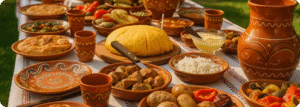
Moldovan cuisine is a delightful reflection of the country’s agricultural abundance and cultural heritage, shaped by influences from neighboring Romania and Ukraine, as well as from Russia and the wider Balkan region. Known for its hearty, flavorful, and wholesome dishes, Moldovan food makes full use of fresh, locally grown ingredients like vegetables, grains, dairy, and meats. With Moldova’s fertile soil and long tradition of winemaking, meals are often complemented by locally produced wines, which are considered among the best in the region.
One of the most iconic dishes is mămăligă, a golden cornmeal porridge similar to polenta, usually served with sour cream, cheese, or meat. Placinte, traditional pastries filled with cheese, potatoes, cabbage, or pumpkin, are another staple, loved for their versatility and comforting taste. Meat dishes, especially pork and chicken, are common, often grilled, roasted, or slow-cooked with herbs and vegetables.
Soups and stews also play a central role in Moldovan cuisine. Zeamă, a tangy chicken soup with homemade noodles and plenty of fresh greens, is a beloved national favorite. Seasonal salads made from garden-fresh tomatoes, cucumbers, and peppers add color and freshness to everyday meals.
Moldova’s culinary identity is also closely tied to its winemaking tradition. With some of the world’s largest underground wine cellars and centuries of expertise, Moldovan wines are internationally celebrated and an essential part of the local dining culture.
Whether savoring a homemade pastry, a hearty stew, or a glass of fine wine, the cuisine of Moldova embodies warmth, tradition, and a sense of community, offering international students and visitors a truly authentic cultural experience.
Moldova offers competitive tuition rates for international students. General Medicine programs typically cost between $4,000 and $6,000 per year. Other bachelor’s degrees generally range from $2,000 to $4,000 annually, while master’s programs are priced between $2,500 and $5,000, depending on the university and specialization.


Fill in your details to process your application


